Oil Refining Companies in UAE
- cprw54
- Jul 14
- 6 min read
This article draws on publicly available data from ADNOC, industry capacity rankings, and recent project reporting. Refining capacity figures and expansion timelines evolve regularly, so verify current data directly from ADNOC's official channels for time-sensitive decisions.
The UAE isn't just a major crude oil producer, it's home to some of the most advanced oil refining companies on the planet. With ADNOC (Abu Dhabi National Oil Company) at the center of the country's downstream strategy, the UAE has quietly become one of the world's most important export refining hubs, supplying refined products to markets across Asia, Europe, and beyond.
Your next job in Dubai or Abu Dhabi starts with a CV that gets noticed. Let our UAE-based experts craft yours. Get started with our professional CV writing service today.
If you're researching oil refining companies in UAE, whether for career opportunities, investment research, or general industry knowledge, this guide breaks down the key players, real production data, and what's actually driving growth in this sector. Think of it as a working reference covering UAE oil refinery companies list essentials, from petroleum refineries in UAE to the broader UAE oil and gas companies landscape.
Why the UAE's Refining Sector Matters Globally
The scale here is genuinely hard to overstate. ADNOC Refining, a joint venture between ADNOC, Eni, and OMV, processes nearly a million barrels of crude oil and condensates per day and supplies more than 40 million tons of high-quality refined products to global markets every year. That output alone places the UAE among the most significant top energy companies in UAE and across the wider GCC energy sector.
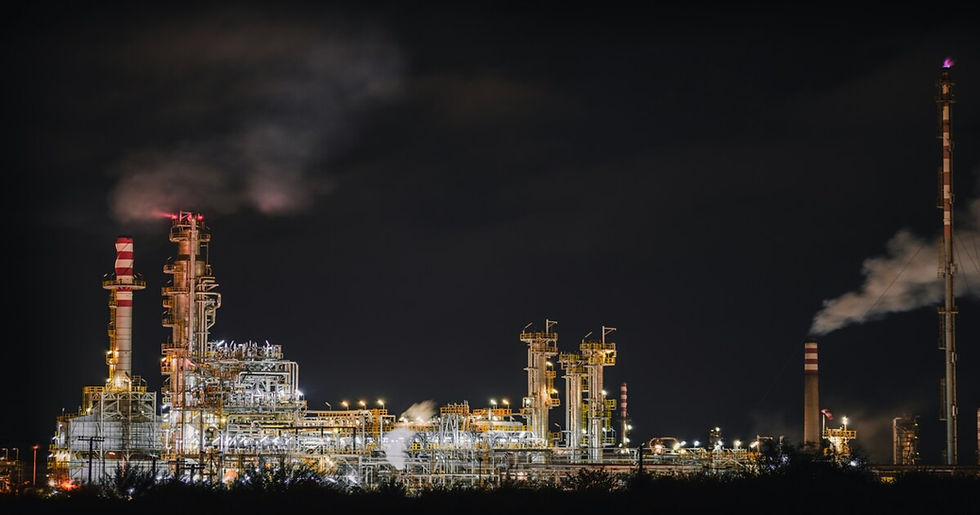
At the heart of this operation is the Ruwais Refinery, located roughly 245 kilometers west of Abu Dhabi City on the coast of the Arabian Gulf. As one of the most significant UAE-based oil refineries and a cornerstone of the country's broader Downstream Oil & Gas strategy, it was inaugurated in 1982 and has grown into the world's fourth-largest single-site refinery, currently processing approximately 922,000 barrels per day (bpd) across its Ruwais East and Ruwais West facilities. ADNOC has publicly stated its ambition to push total refining capacity toward 1.5 million bpd by 2031 through a phased Ruwais expansion, a move designed to cement the UAE's position as a downstream export hub serving Asian markets in particular.
Major Oil Refining Companies in UAE
ADNOC Refining (Abu Dhabi)
As the dominant force among major oil refineries in Abu Dhabi and consistently ranked among the best oil refining firms UAE has to offer, ADNOC Refining operates the Ruwais complex and remains the backbone of the UAE's downstream oil companies sector.
Among oil refinery companies Abu Dhabi hosts, none rival ADNOC's scale. Beyond crude processing, ADNOC produces liquefied petroleum gas, naphtha, gasoline, jet fuel, Group III base oils, and petrochemical feedstock such as propylene, plus specialty products like carbon black and calcined petroleum coke. The company's broader group output includes about 3 million barrels of oil and 10.5 billion cubic feet of natural gas daily, backed by an AED 165 billion (roughly $45 billion) downstream expansion strategy.
While ADNOC dominates upstream and large-scale refining, Emirates National Oil Company (ENOC) plays a major role in downstream distribution, fuel marketing, and retail across the UAE, including significant operations connected to Jebel Ali and Dubai's broader energy infrastructure. ENOC's presence illustrates how UAE downstream oil companies extend well beyond crude processing into fuel distribution, storage, and retail networks that keep the domestic market supplied.
Dragon Oil, headquartered in Dubai, represents another important piece of the UAE's broader energy ecosystem, with a primary focus on upstream exploration and production rather than refining directly, but its presence reinforces Dubai's role as a regional hub for integrated oil and gas operations. Among leading refining companies in Dubai and refining companies in Dubai more broadly, activity leans toward trading, upstream ventures, and distribution rather than large-scale crude processing, which remains centered in Abu Dhabi.
On the eastern coast, the Fujairah Oil Terminal has become one of the world's key storage and bunkering hubs, sitting outside the Strait of Hormuz and giving the UAE strategic flexibility in fuel distribution and crude storage that complements the refining capacity concentrated in Abu Dhabi.
The Real Numbers Behind UAE Refining Capacity
If you're evaluating top petroleum refineries in UAE, the data tells a clear growth story. As one of the region's largest UAE petroleum processing companies, ADNOC's Crude Flexibility Project alone represented a $3.5 billion investment enabling the Ruwais complex to process heavier, sourer crude grades, including Upper Zakum, alongside more than 50 other crude types, expanding beyond the traditional reliance on Murban grade crude that ADNOC has refined for over 40 years.
By industry rankings, Ruwais now sits among the top refining complexes globally by Refinery Capacity, trailing only a handful of mega-facilities worldwide. ADNOC's stated plan to expand refining capacity by more than 65%, targeting a total capacity of 1.5 million barrels per day, represents one of the most ambitious downstream expansion programs among oil processing companies UAE and the wider global energy sector, positioning the UAE as a long-term export refining hub rather than a purely domestic-focused producer. Regulatory oversight from the UAE Ministry of Energy continues to shape how these expansions align with national energy security goals, and it factors heavily into how refining industry players in UAE and broader UAE petroleum companies plan long-term capacity investments.
What's Driving Growth in UAE Refining Companies
Several forces are converging to make this sector particularly dynamic right now:
Crude Oil Processing diversification — ADNOC's ability to now process dozens of different crude grades, rather than relying almost exclusively on Murban, gives it far greater flexibility to respond to shifting global demand and pricing.
Petrochemicals integration — Ruwais isn't just a refinery; it's increasingly designed to feed directly into petrochemical production, maximizing the value extracted from every barrel processed.
Sustainability investment — ADNOC has publicly committed to advanced carbon capture, cleaner fuel production, and green hydrogen and ammonia initiatives, aligning with the UAE's National Energy Strategy 2050.
Regional strategic positioning — With OPEC production decisions directly influencing crude availability and pricing, the UAE's refining capacity gives it leverage to convert raw crude into higher-margin, exportable finished products rather than solely relying on crude exports.
Common Questions About UAE Refining Companies
What is the largest oil refinery in UAE? The Ruwais Refinery, operated by ADNOC Refining, is by far the largest, processing over 920,000 barrels per day and ranking among the largest single-site refining complexes in the world.
Are there oil refining companies in Dubai specifically? Dubai's energy sector is more heavily weighted toward distribution, trading, and upstream operations through companies like ENOC and Dragon Oil, while large-scale refining capacity is concentrated primarily in Abu Dhabi through ADNOC.
How does UAE refining capacity compare globally?
The Ruwais complex ranks among the world's largest refining sites by processing volume, putting the UAE in the same conversation as major refining hubs in Saudi Arabia, the United States, and Asia.
How to Use This Information
Whether you're researching this sector for career, investment, or academic purposes, here's how to move forward productively:
Job seekers: Focus your search on ADNOC Group entities and their joint-venture partners (Eni, OMV), since these control the vast majority of large-scale refining operations and associated engineering, process, and logistics roles in the UAE.
Investors and analysts: Track ADNOC's public capacity expansion announcements and petrochemical integration projects, since these directly signal where downstream margins, and hiring, are likely to grow.
Students and researchers: Use verified sources like ADNOC's official reporting and recognized energy industry publications rather than aggregator sites, given how quickly capacity figures and project timelines shift in this sector.
Business partners and suppliers: Understand that Abu Dhabi, not Dubai, remains the epicenter of large-scale refining infrastructure, even though Dubai plays a significant complementary role in trading, distribution, and upstream ventures.
Final Thoughts
The UAE's refining sector, anchored by ADNOC and the Ruwais complex, represents one of the most technically advanced and strategically significant downstream energy operations in the world. With capacity expansion plans pushing toward 1.5 million barrels per day, deep integration with petrochemicals, and a genuine sustainability push through carbon capture and green hydrogen initiatives, this sector shows every sign of remaining central to the UAE's economic strategy well beyond the current decade, making it one of the most important pieces of the region's broader oil and gas identity for years to come.