Is Oil Refining/Marketing a Good Career Path?
- cprw54
- Jul 14
- 7 min read
This article draws on 2026 data from IBISWorld, the U.S. Bureau of Labor Statistics, the American Petroleum Institute, Deloitte's Oil & Gas Industry Outlook, and the EIA. Industry conditions shift quickly, so verify current figures before making major career decisions.
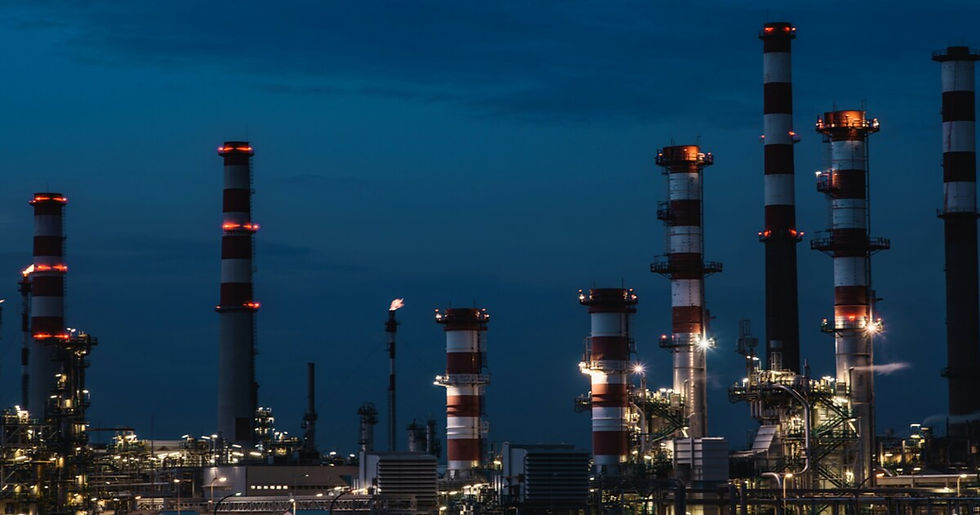
Few industries spark as much career debate as oil refining and oil marketing. On one hand, you'll hear stories of six-figure salaries and rock-solid job security. On the other, headlines about refinery closures and the renewable energy shift make it sound like a sunset industry. So which is it? Is an oil refining career path actually a smart move in 2026, or a bet on an industry that's already fading?
Ready to land your dream job in the UAE?
Build a recruiter-approved CV that highlights your skills and gets results.
The honest answer, backed by real labor data rather than speculation, is: it depends heavily on where in the industry you build your career, and understanding that nuance is exactly what separates good career advice from generic optimism or unwarranted panic. This guide looks closely at career prospects in oil refining industry roles and petroleum industry job prospects more broadly, using current labor data rather than assumptions.
Employment Picture in Oil Refining and Downstream Energy
Let's start with what's actually happening in the workforce, because the data here is genuinely more layered than most headlines suggest.
According to IBISWorld's 2026 industry data, petroleum refining employment in the US sits at approximately 53,511 workers in 2026, a 3.0% year-over-year increase, even though the industry's five-year compound growth rate from 2021 to 2026 was slightly negative at -1.2%. In plain terms: the sector has been contracting slowly over the past several years, but it saw a genuine uptick in hiring this year.
Zoom out from narrow refining roles to the broader downstream industry and energy sector jobs ecosystem, including pipelines, refineries, petrochemicals, and supply chain roles, and the picture gets considerably bigger. An American Petroleum Institute study found that the oil and gas industry as a whole supports roughly 10.3 million US jobs when direct, indirect, and induced employment are combined, representing about 5.6% of the entire US workforce. That makes it one of the highest employment-multiplier sectors in the American economy, and it also explains why Energy Sector Employment trends are watched so closely by economists, not just industry insiders. Global supply decisions by producer alliances like OPEC also ripple down into refining margins and, ultimately, hiring levels at the plant level.
Why an Aging Workforce Is Creating Real Opportunity
Here's a stat that doesn't get nearly enough attention when people evaluate career opportunities in this field: nearly 20% of the oil and gas workforce is expected to retire by 2026, according to industry hiring trend analyses. That's a massive wave of departures hitting an industry that still needs skilled hands-on workers, plant operators, technicians, engineers, and maintenance specialists, to keep operations running 24/7.
Specifically for refinery careers, industry projections show the employment growth rate for refinery operators and pump system workers running at roughly 5.4% between 2020 and 2030, with about 4,400 job openings expected annually, driven by both steady industry demand and this ongoing wave of retirements. That combination of retiring veterans and continued need for refined petroleum products is precisely why entry-level and technician positions in oil and gas are expected to remain relatively accessible through 2026, especially for candidates willing to build hands-on technical skills.
The Compensation Reality: Why This Career Path Still Pays Well
If you're weighing whether is working in oil refining worth it, compensation data tells a compelling story. The average direct refinery compensation in the US now sits at roughly $334,000 per year when you factor in full benefits, healthcare, retirement contributions, and safety-related compensation, more than three times the national average wage. Even excluding executive-level roles, unionized refinery workers without college degrees have reported base salaries around $115,000 per year, often paired with a full pension and an 8% 401(k) match.
Refinery operator wages specifically have climbed nearly 60% since 2004, with median annual earnings around $70,000 in recent data. Regional demand is also concentrated in specific hubs, Houston, Beaumont-Port Arthur, and Los Angeles-Long Beach lead in refinery operator job density, meaning energy sector jobs in these metro areas offer both volume and competitive pay. Understanding this wage pattern is really a question of Petroleum Economics, margins, crude prices, and regional supply all directly shape how much Refinery Operations roles pay in any given year.
This is a big part of why, historically, refinery closures hit local economies so hard: for many workers without four-year degrees, there's often no comparable private-sector employer offering similar wages and benefits within the same region.
Is Petroleum Marketing a Good Career Choice?
The oil marketing career opportunities side of this industry looks somewhat different from refining itself. If you're mapping out an oil marketing job path, marketing and distribution roles, sales, fuel logistics, brand management for fuel retailers, and supply chain coordination, depend heavily on fuel distribution networks and consumer demand patterns rather than physical plant operations.
This side of the business tends to be more resilient to the automation pressures affecting upstream exploration, since it still requires relationship management, regional market knowledge, and logistics coordination that AI and automation handle less effectively than they do geological analysis or predictive maintenance. If you're specifically asking about a petroleum refining career versus marketing, the marketing side generally offers more geographic flexibility and a smoother transition path into broader supply chain and logistics roles across other industries, should you want that option later. Both paths fall under the wider umbrella of careers in oil and gas sector work, and oil and gas career opportunities exist across both, the right fit really comes down to whether you prefer hands-on plant operations or market-facing, relationship-driven work.
The Elephant in the Room: Automation and the Energy Transition
No honest answer to "is oil refining/marketing a good career path" can skip two major forces reshaping this industry: automation and the renewable energy transition.
Deloitte's 2026 Oil & Gas Industry Outlook identifies technology adoption as one of the sector's top five strategic trends, with AI now deeply embedded across upstream exploration, midstream operations, and downstream refining. AI-assisted geological and seismic analysis is already reducing headcount needs in exploration, while predictive maintenance platforms are cutting unplanned downtime, meaning fewer emergency-response hires but sustained demand for workers who can manage and interpret these systems.
At the same time, the broader energy sector is genuinely mid-transition. UBS has raised its global oil refining margin outlook due to project delays and select refinery closures, while the EIA's 2026 forecasts show gasoline prices around $3.70/gallon and diesel around $4.80/gallon, both climbing amid tightening distillate inventories. Environmental Regulations (Energy Industry) compliance costs are a major factor in which facilities expand versus shut down, and they're increasingly steering investment toward Green Energy Jobs as companies hedge against long-term regulatory and demand shifts. Meanwhile, closures like the Benicia refinery in California and ongoing rehabilitation struggles at facilities like Nigeria's NNPC refineries illustrate that this is genuinely a two-speed industry: some regions and facilities are contracting hard, while others, particularly in Texas and the Gulf Coast, remain robust hiring hubs.
This is the nuance that matters most: job automation in the energy sector isn't eliminating the industry outright, but it is concentrating opportunity in specific roles, regions, and skill sets, while phasing out others.
Common Concerns, Answered Honestly
Is petroleum refining job outlook stable?
It's mixed but leaning cautiously positive for skilled roles. Narrow refining employment has contracted slightly over the past five years, but 2026 shows renewed hiring, driven largely by retirements rather than industry expansion.
Will renewable energy replace oil refining jobs?
Not immediately, but the transition is real. Diversifying your skill set toward areas like process engineering, petrochemicals, or hybrid renewable-and-fossil-fuel operations positions you well regardless of how quickly the shift accelerates.
Is oil industry career stability worth the environmental and regulatory uncertainty? This depends on your risk tolerance and region. Facilities in stable, high-demand hubs (Gulf Coast, Permian Basin) currently offer stronger job security than aging refineries facing costly environmental regulation upgrades or closure decisions.
How to Build a Resilient Career in Oil Refining and Marketing
If you're seriously considering this path, here's how to position yourself wisely:
Target growth regions specifically. Texas alone accounts for nearly half of the national energy services workforce, with Louisiana and Oklahoma as secondary hubs — geography matters enormously in this industry.
Build hands-on technical certifications. Refinery operator training, process engineering fundamentals, and safety certifications remain in high demand as veteran workers retire.
Don't ignore the marketing and logistics side. If plant-floor operations aren't your interest, oil and gas industry careers in supply chain, fuel distribution, and regional sales offer strong entry points with more geographic flexibility.
Watch the renewable energy transition as an opportunity, not just a threat. Many major energy companies are investing in hybrid roles that bridge traditional refining knowledge with newer, greener technologies, positioning early gives you a real advantage.
Factor in total compensation, not just salary. Union benefits, pensions, and healthcare packages in this industry are often significantly stronger than comparable private-sector roles, especially for workers without a four-year degree.
Stay alert to regulatory shifts. Environmental regulations directly affect which facilities expand versus shut down, following industry outlook reports (EIA, Deloitte, IBISWorld) helps you anticipate where hiring will concentrate next.
Final Verdict
So, is oil refining/marketing a good career path? Based on current labor data, yes, with important caveats. It remains one of the highest-paying industries accessible without a four-year degree, supported by a massive employment multiplier effect across the broader economy, and currently experiencing a genuine hiring window driven by an aging, retiring workforce.
But it's not a uniformly safe bet everywhere. Facility closures, automation in upstream and maintenance functions, and the accelerating renewable energy transition mean this career path rewards those who choose their region, specialization, and skill set deliberately, rather than assuming the industry as a whole offers guaranteed long-term stability.
For the right candidate, technically skilled, geographically flexible, and willing to adapt alongside the industry's genuine transformation, oil refining and marketing can still offer one of the strongest compensation-to-entry-barrier ratios in the American job market today.